The work
How it works
- 01
A closed mold
Rotational casting needs a cavity—usually silicone you pour around a master. The machine does not make the mold. You do, or you buy one.
- 02
Pour
Mix resin, pour it in, close the mold. You use less material than a solid pour: the spin makes a skin, not a brick.
- 03
Turn
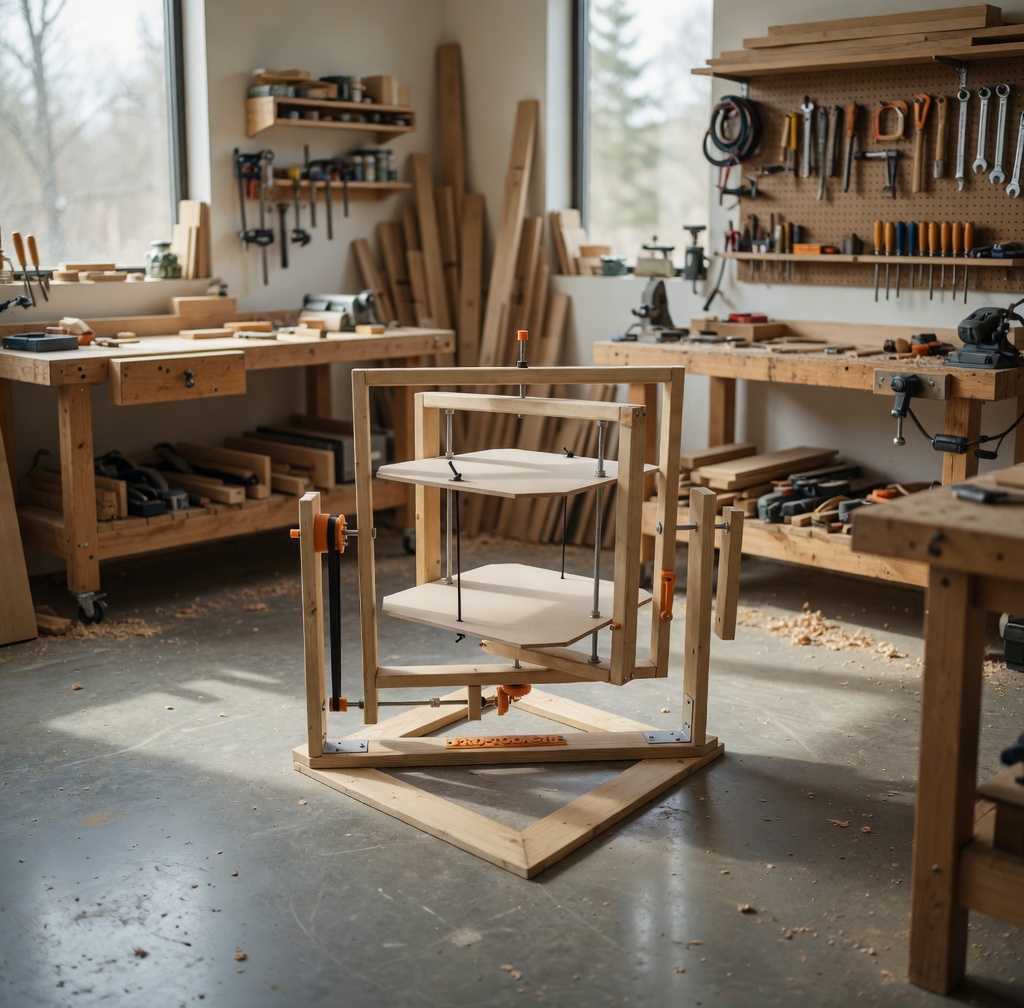
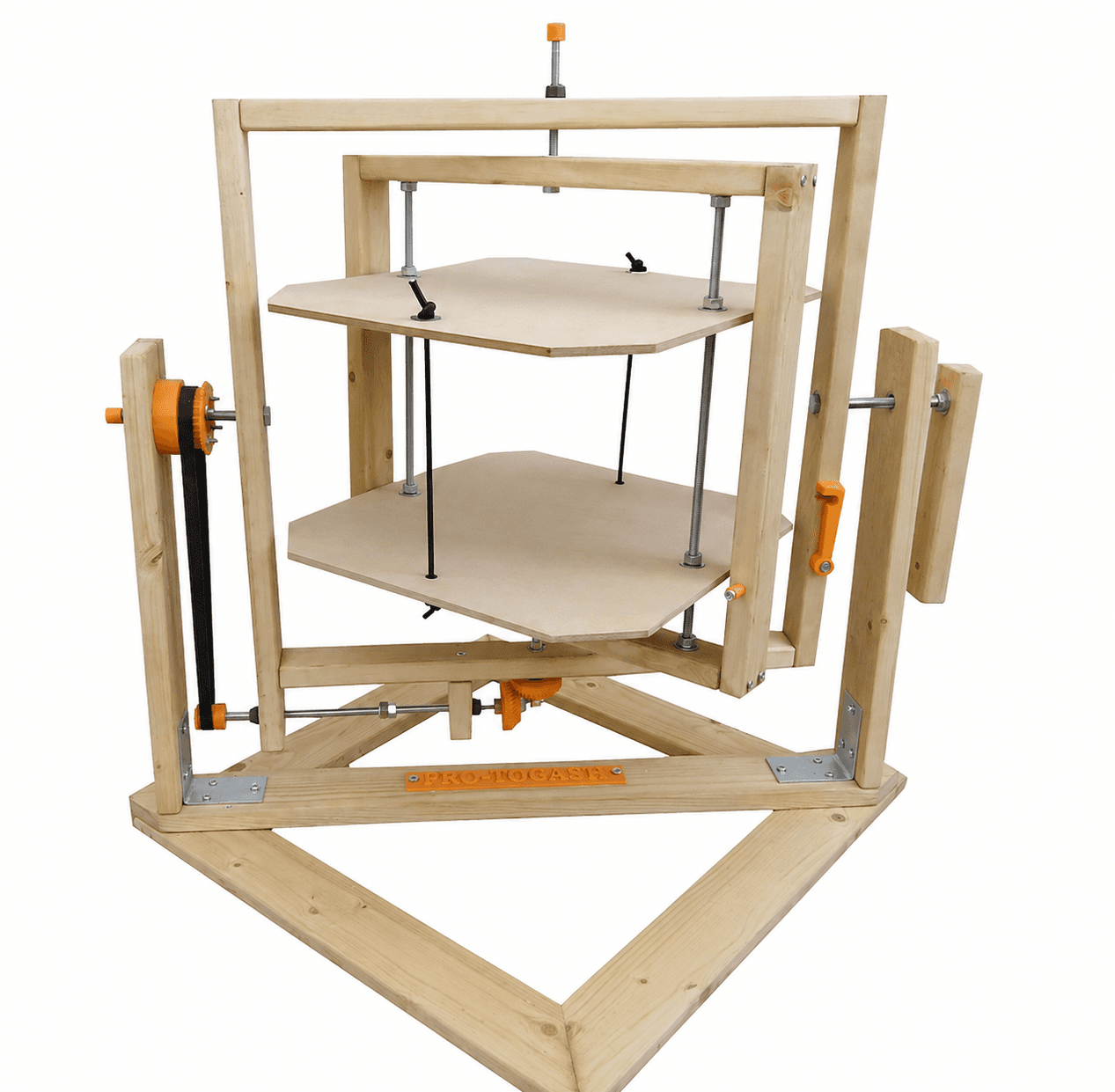
Slow rotation on two axes so the resin coats evenly. Hand-crank when you want to feel the speed. A motor holds a steady spin if you cast often.
- 04
Demold
Wait out the cure. Open the mold. Hollow walls, even thickness, no print-layer texture. Same mold, as many pulls as the rubber will take.
Before you pour
What you need
- A silicone mold, and some practice making or using one
- Casting resin (you pick the material)
- About four square feet of bench
- The machine arrives about 95% assembled—bolt on the base and plates
A rotocaster is the rotation. You bring the mold and the resin. Read up on silicone and your first pour before the machine lands—this is bench work, not a gadget.
Built in the shop. Wood frame, plates you bolt on. No login. A motor is only a steady crank.
Start here
Manual · 12″ plates
Most people start with the 12″ manual. Bench size, $139.95, enough plate for props, figures, and smaller molds. Step up when the mold outgrows it.
The mold
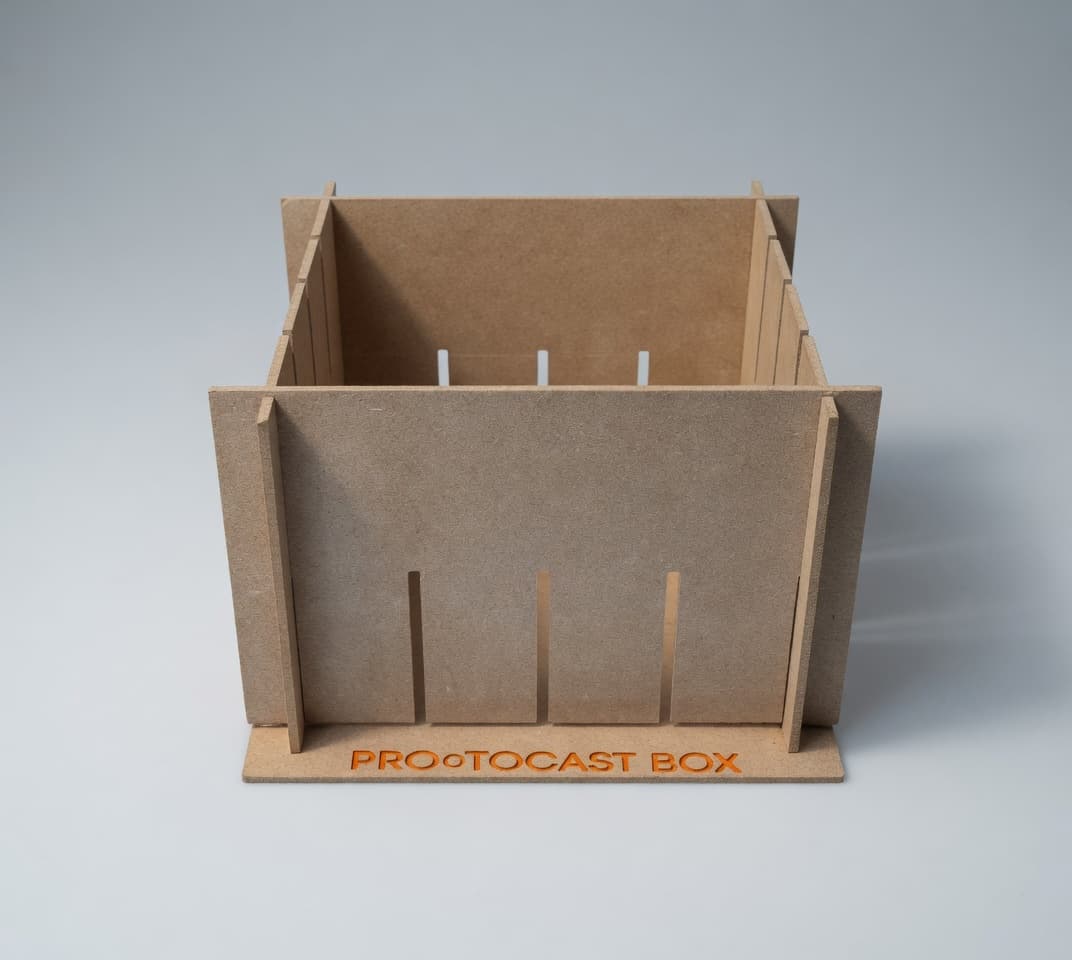
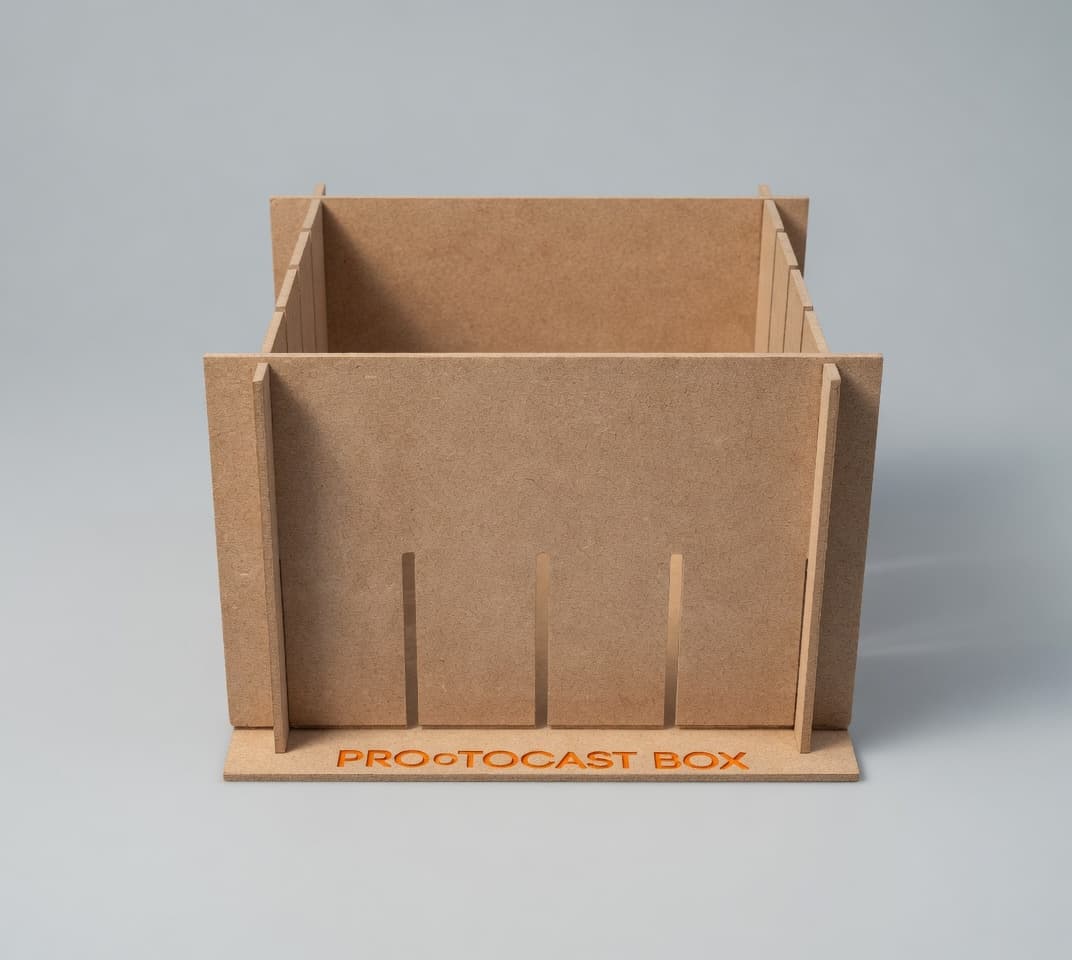
The Box by Banly's
Set the walls where you need them instead of collecting fixed-size forms. Pour, cure, and demold in one clean envelope—whether you are prepping blanks for the rotocaster or working mold-only.
FAQ
Common questions
- What is rotational casting?
- You close a mold, add liquid resin, and rotate so the material coats the walls. When it cures, you have a hollow part—props, figures, keepsakes, workshop copies.
- Do I need a mold before I can cast?
- Yes. The rotocaster spins the mold; it does not replace mold-making. Start with a simple one-part or two-part silicone mold, or buy a mold from a maker who sells them.
- What size should I start with?
- The 12″ manual is the usual first machine: a solid bench size, $139.95, enough room for props, figures, and smaller molds. Step up when your molds outgrow the plate or you want a motor.
- What is The Box?
- An adjustable molding box for the silicone pour—use it with a rotocaster or on its own. 10″ and 14″. Set the walls, pour, cure, demold.